


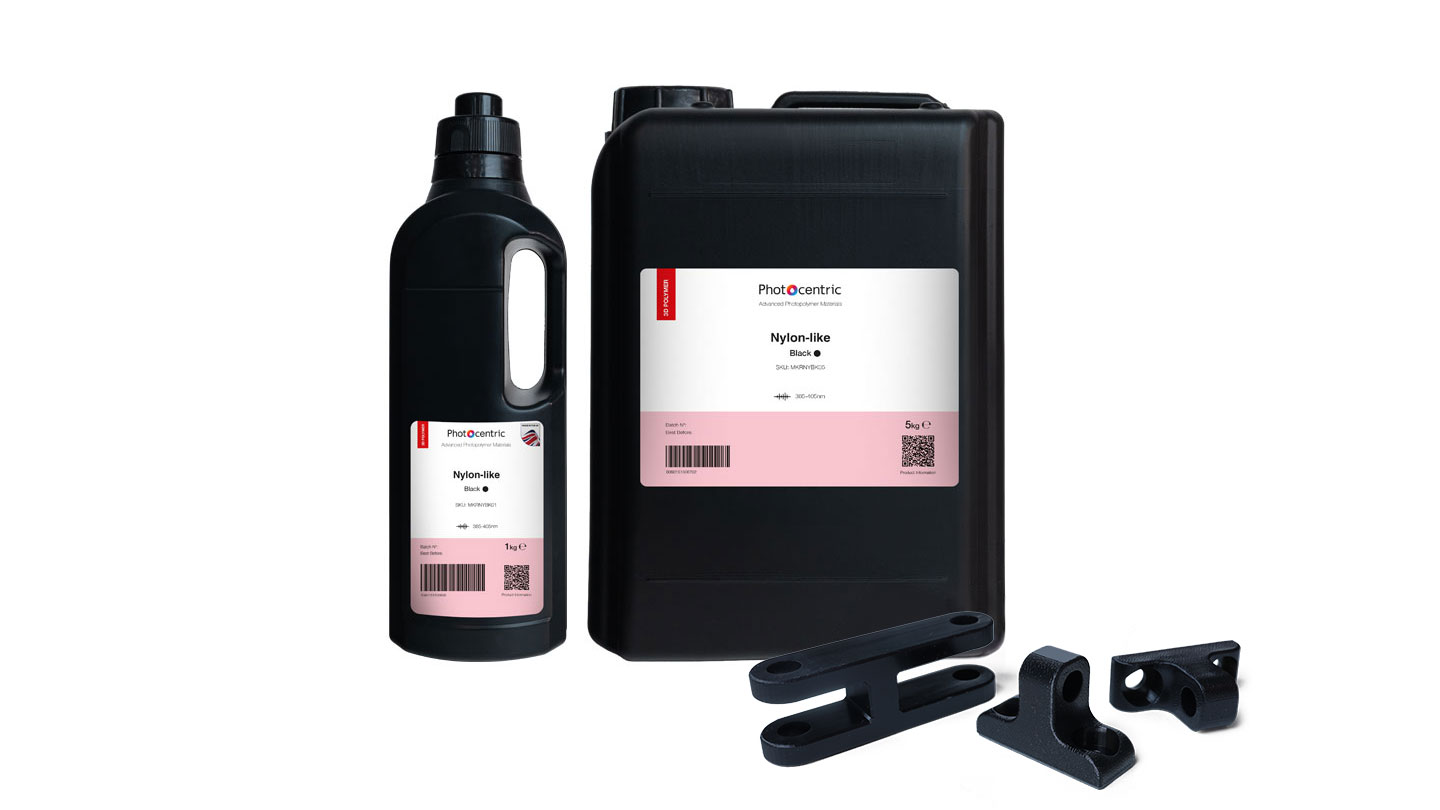
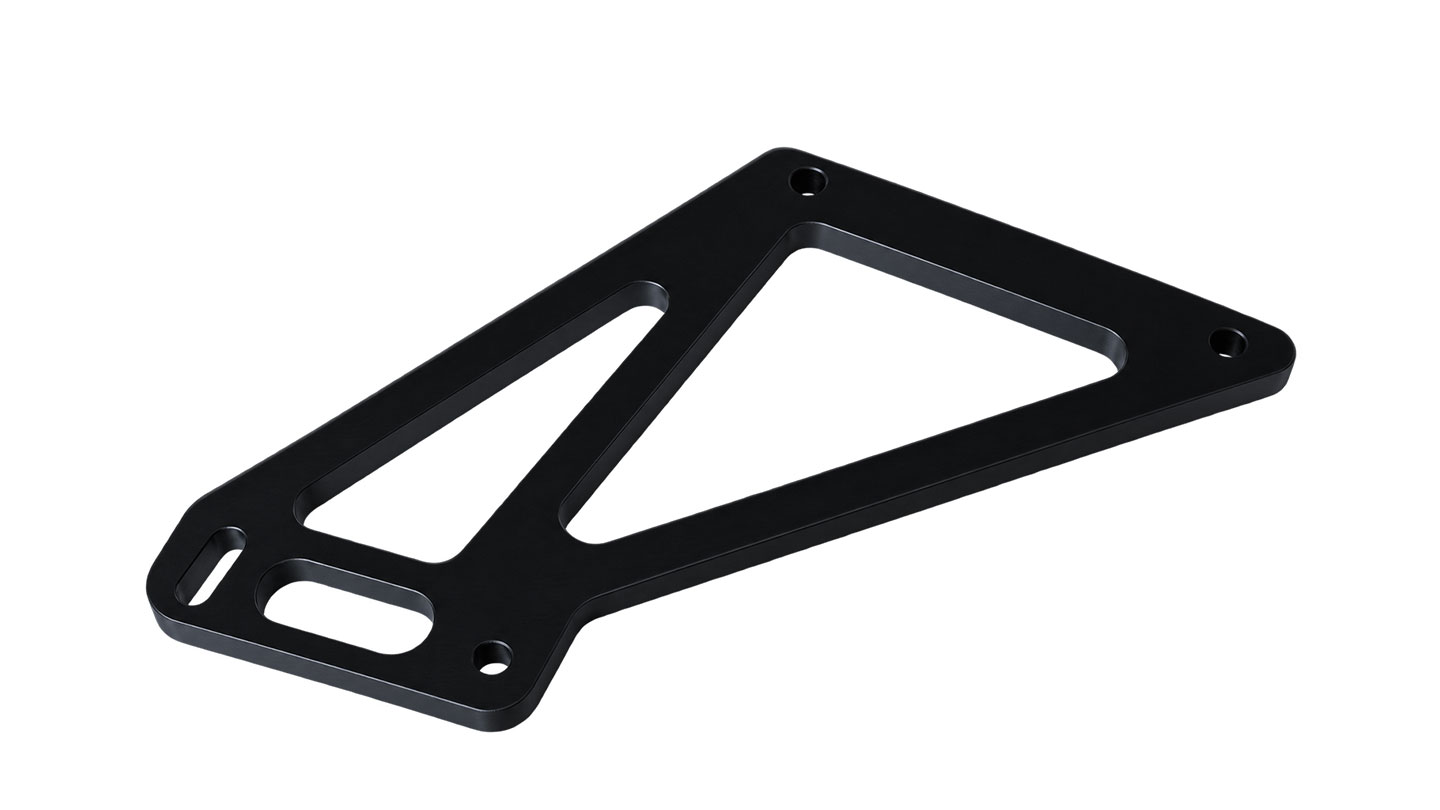
Nylon-like 3D Resin
Energy-absorbing, nylon-like 3D printing resin with a matt finish for snap-fits, jigs, brackets and enclosures.
Price range: $39.00 through $187.70 excl vat
FREE UK shipping on orders over £250
Nylon-like 3D Printing Resin for Tough, Energy-Absorbing Functional Parts
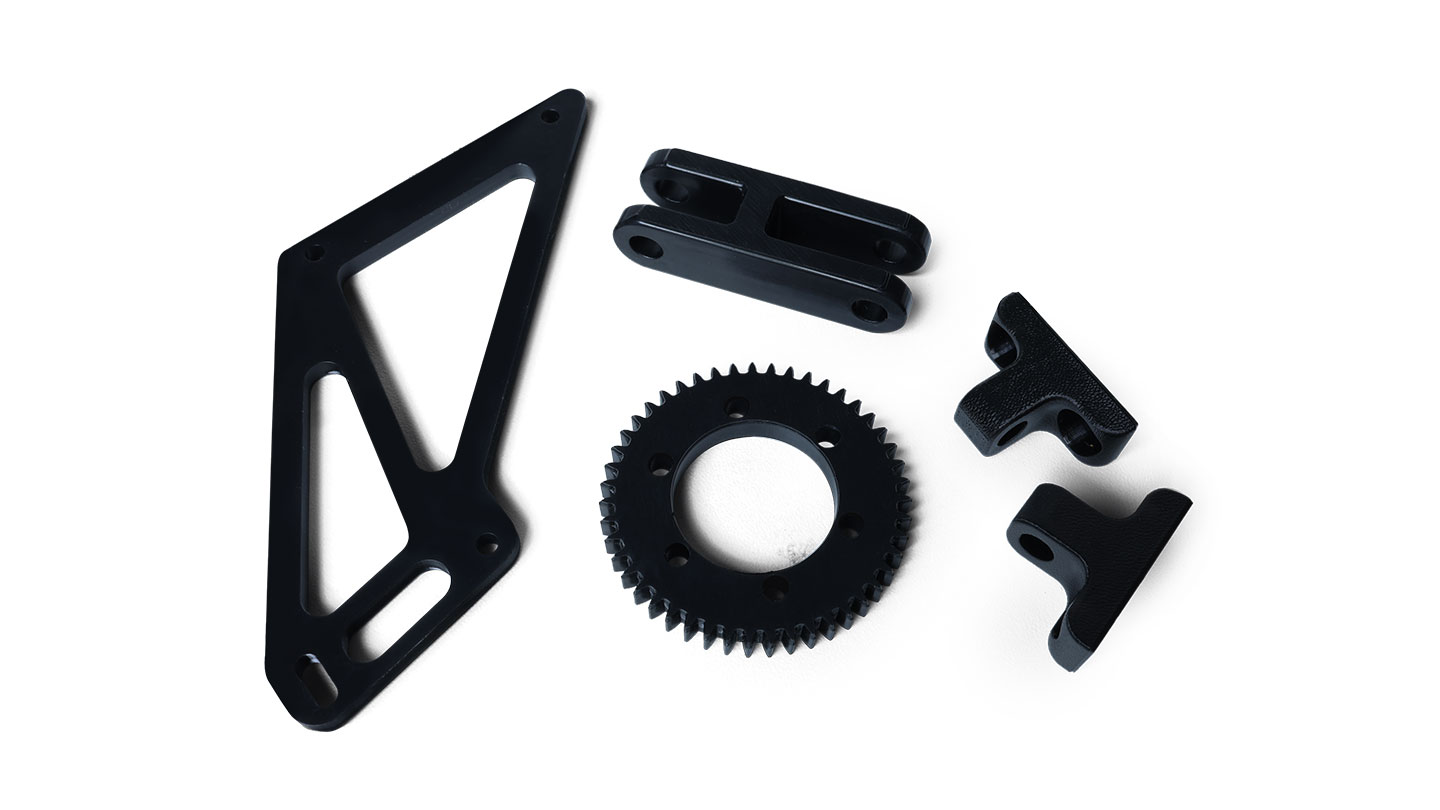
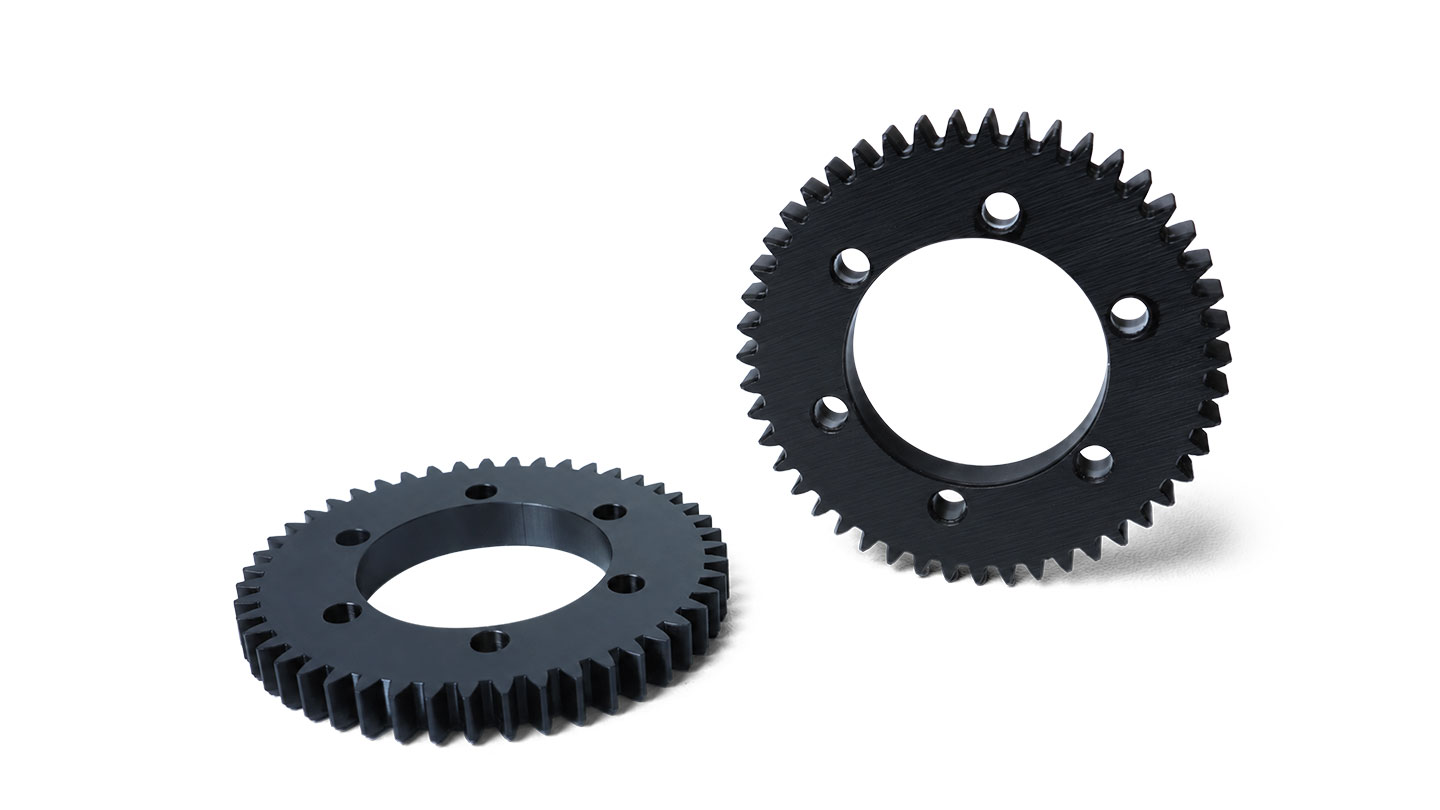
Nylon-like is a 3D printing resin developed to reproduce the feel and failure behaviour of injection-moulded polyamide. Rather than shattering, printed parts tend to bend and absorb energy before they fail, making it a practical choice for snap-fits, jigs and housings. High green strength supports overhangs during printing, while low surface friction gives parts a pleasant hand feel.

High Energy Absorption
Produces smooth matt surfaces with reduced layer lines, making parts easier to finish and handle.

Matt Finish
Produces smooth matt surfaces with reduced layer lines, making parts easier to finish and handle.

Low Viscosity
Low viscosity (610 cPs at 25°C) supports fast, clean printing and easy, everyday resin handling.

Good HDT
Heat Deflection Temperature of 89°C at 0.455 MPa helps parts remain stable in warmer working environments.
 Properties
| Green | Post-cured* | |
| Tensile Properties | ||
| Tensile Modulus | 623 MPa | 1240 MPa |
| Tensile Strength (Break) | 20.2 MPa | 41.7 MPa |
| Tensile Strength (Yield) | 15.8 MPa | 46.5 MPa |
| Elongation at Break | 73% | 27.9% |
| Flexural Properties | ||
| Flexural Strength | - | 52 MPa |
| Flexural Modulus | - | 1380 MPa |
| Impact Properties | ||
| Impact Strength Notched Izod | - | 38J/m |
| *Mechanical properties stated based on fully cured material. | ||
Applications
Nylon-like’s combination of energy absorption, low surface friction and a matt finish makes it well suited to functional parts that need to flex, fit and perform, from early prototypes through to jigs, clips and protective enclosures used in demanding everyday engineering and workshop environments.
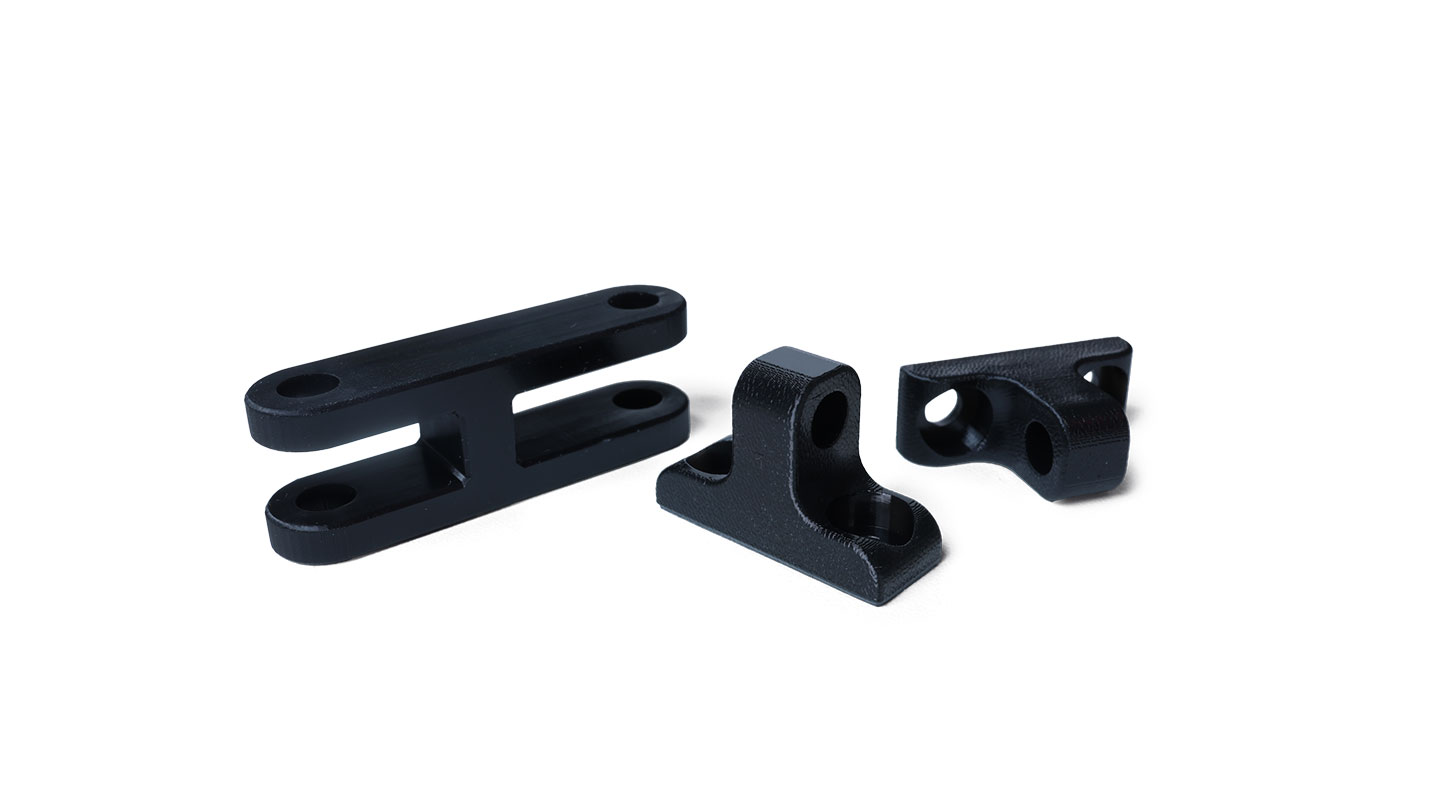
Snap-fit, Clips and Brackets
Suited to snap-fits, clips and brackets that need to flex during assembly, with parts that tend to bend and absorb energy rather than shatter.
Housings and Enclosures
A practical choice for housings and enclosures needing a refined matt finish and the toughness to cope with everyday handling, including in warmer working environments.
Jigs, Fixtures and Tooling
Well suited to workshop jigs, fixtures and tooling, where low surface friction helps reduce wear and parts need to absorb knocks during repeated use.
Functional Prototypes
Ideal for prototypes that need to be handled, assembled and tested, with a nylon-like feel and bending behaviour that reflects how injection-moulded polyamide parts perform.
Frequently Asked Questions
What is Nylon-like resin used for?
Nylon-like resin is used for functional prototypes, jigs, fixtures and tooling, snap-fits, clips and brackets, and housings and enclosures. It was developed to reproduce the feel and failure behaviour of injection-moulded polyamide, so it suits parts that need to flex, fit and be handled repeatedly rather than simply be looked at.
Printed parts tend to bend and absorb energy before they fail, rather than shattering like many standard rigid resins. Combined with low surface friction and a matt finish, this makes it a practical choice for both prototyping and workshop parts that see regular use.
How does Nylon-like compare to injection-moulded nylon?
Nylon-like is designed to reproduce the feel and failure behaviour of injection-moulded polyamide, meaning parts yield and deform plastically before breaking rather than shattering. It is a 3D printing resin rather than a direct material equivalent, so it is best used to prototype and produce parts where that nylon-style behaviour matters.
Its key mechanical properties after post-curing are:
Tensile strength at yield: 46.5 MPa
Elongation at break: 27.9%
Tensile modulus: 1240 MPa
Shore hardness: 83 Shore D
The practical benefits of 3D printing apply too: no tooling and short lead times, with the freedom to iterate on a design before committing to production. For applications with strict regulatory or performance requirements, we would always recommend testing printed parts against your own specification.
Is Nylon-like suitable for snap-fit parts, clips and brackets?
Yes, Nylon-like is well suited to snap-fit parts, clips and brackets, because printed parts tend to bend and absorb energy before they fail, rather than breaking suddenly. This yielding behaviour is what makes a snap-fit work, allowing it to flex during assembly and return to a functional shape.
Post-cured, it offers a tensile strength at yield of 46.5 MPa and an elongation at break of 27.9%, giving useful flexibility alongside strength. Its low surface friction also helps reduce wear where parts slide or engage repeatedly.
For best results, the recommended minimum feature sizes are 0.5 mm for pins, 0.4 mm for walls and 0.6 mm for holes. Printing at 45° around all axes is also recommended.
What is the heat deflection temperature of Nylon-like?
Nylon-like has a heat deflection temperature (HDT) of 89°C at 0.455 MPa, measured to ASTM D648 on post-cured parts. This helps printed parts remain stable in warmer working environments, such as workshops, enclosures near electronics, or parts exposed to moderate heat during use.
These figures apply to parts post-cured for 2 hours at 60°C in a Photocentric Cure M+. HDT depends on the load applied, so parts under higher stress may deflect at lower temperatures than the figure above. As with any functional material, we would recommend testing parts under your own real operating conditions.
Which 3D printers is Nylon-like compatible with?
Nylon-like is compatible with LCD 3D printers operating in the 385-405nm wavelength range, which covers a wide range of resin printers on the market.
Photocentric resins are formulated to work across a broad range of third-party printers, and print profiles are available on our print settings page. Recommended support settings are provided for the Photocentric JENI system, giving you a starting point for orientation and supports. For best results, shake the bottle for at least 2 minutes before pouring into the vat.
You may also like…
-

Polycarbonate-like 3D Resin
Price range: $29.00 through $140.00 excl vat -
50% Off
Hard UV 3D Resin
Original price was: $67.50.$33.75Current price is: $33.75. excl vat -
50% Off
Durable UV80 3D Resin
Original price was: $101.25.$50.63Current price is: $50.63. excl vat -
High Tensile UV 3D Resin
$56.00 excl vat
Reviews