



Producing Custom-fit Football Pads
with 3D Printing
Redtail Innovations specialize in product development and custom manufacturing. Based out of El Reno, Oklahoma, Redtail Innovations focus on making ideas a reality with a combination of custom prototyping and high-volume manufacturing.
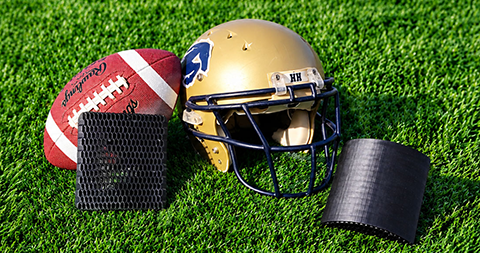
Their signature Guard Series protective pads utilize Photocentric’s LC Magna and DL160 resin. Offering athletes custom thigh, hip and tailbone pads, allowing athletes to pick a fit and style that suits them best without compromising on safety or comfort.
INTERVIEW
Brent Gaddis II
Co-founder and CEO, Redtail Innovations
As an engineer and former cornerback at Southern Nazarene University, Brent has combined his first-hand knowledge of the sport with his product development skills to create an innovative product that resonates with athletes.

What is the Guard Series?
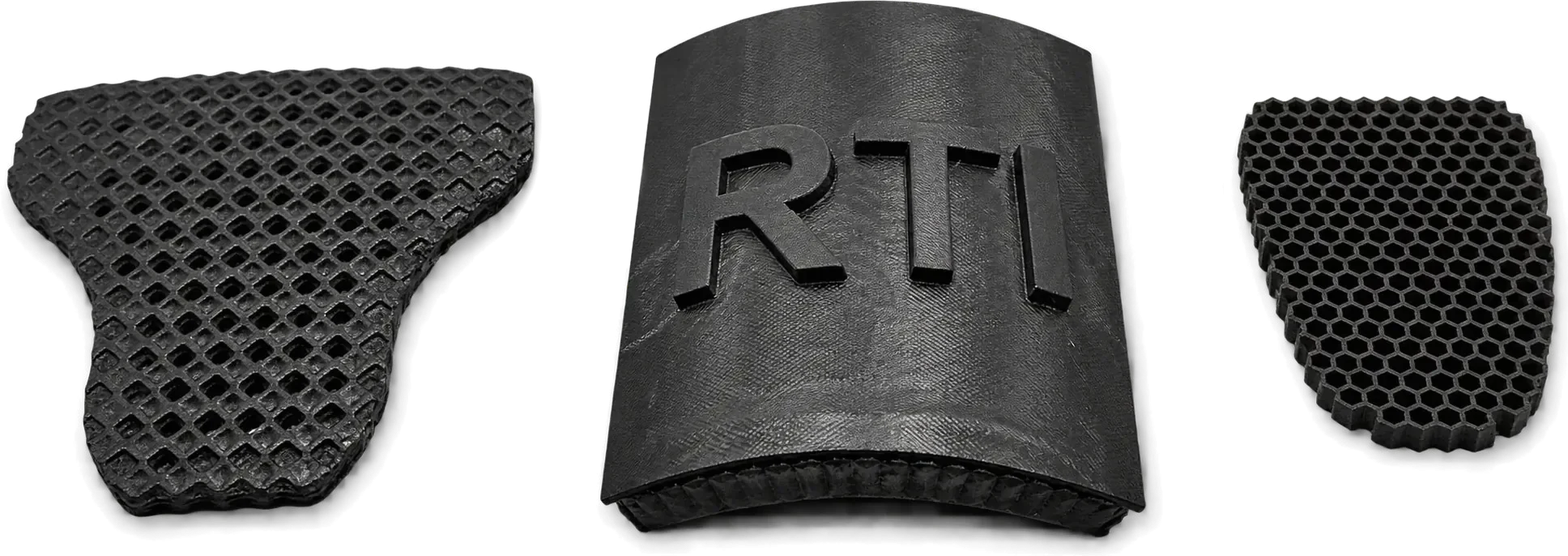
The Guard Series is Redtail Innovations' line of protective padding products. We started with American football. The line includes our Aero thigh pads for skill positions, our Fortress thigh pads for power positions, and a 5-pad set with two thigh pads, two hip pads and a tailbone pad. Every pad is built on our custom lattice IP, printed in Photocentric's DL160 resin, and can be personalized with an athlete's number or logo. Football is just the starting point, though. The Guard Series is designed to grow into protective gear for other sports and applications.
What initially made you spot there was a gap in the market for customized football protective gear?
I played college football, and I’m an engineer, so I know what a football pad has to do and where most of them fall short. The Guard Series is where those two sides of me came together.
As a player, what frustrated you most about the pads you wore?
They were generic, one-size-fits-most foam, so they never really fit. They were bulky enough that I could feel them slowing me down, which is the last thing you want as a cornerback. They also slid around in my pants pockets, so a pad wasn't always where it needed to be when I took a hit. Like most players, I just wore them as-is because there wasn't a better option. That's what I set out to fix. Standard pads are die-cut or molded foam: generic sizes, often bulky, and commonly replaced every season.
How did your time as a cornerback at Southern Nazarene shape the way you approach product design for the Guard Series?
Playing corner, everything comes down to speed and reaction, so I designed the Guard Series around three rules.
RULE 1
Low-profile
Zero drag, so nothing slows a player down.
RULE 2
Stays put
Holds its position when you plant and cut.
RULE 3
Lightweight
Without giving up the protection needed to make tackles.
3D printing our lattice in Photocentric's Elastic DL160 is how we hit all three, and the Aero pad is built for exactly that kind of player.
How did resin 3D printing first become part of how Redtail makes things?
It started with our clients. As a product development and manufacturing company, we kept getting projects that needed production-quality, end-use parts, and we wanted to deliver them with additive manufacturing instead of sending customers to injection molding. Aesthetics were a big driver. Resin printing gives a smooth surface finish and fine detail that make parts look like finished products, not prints. It also gave us a flexible manufacturing system. We can run a handful of parts for one client or batches around the clock for another, without retooling. The range of compatible materials, some with unique properties, opened up solutions we couldn't offer before. Once that capability was in-house, it also led to our own products, starting with the Guard Series.
Why did you choose the LC Magna, and how long have you been running it?
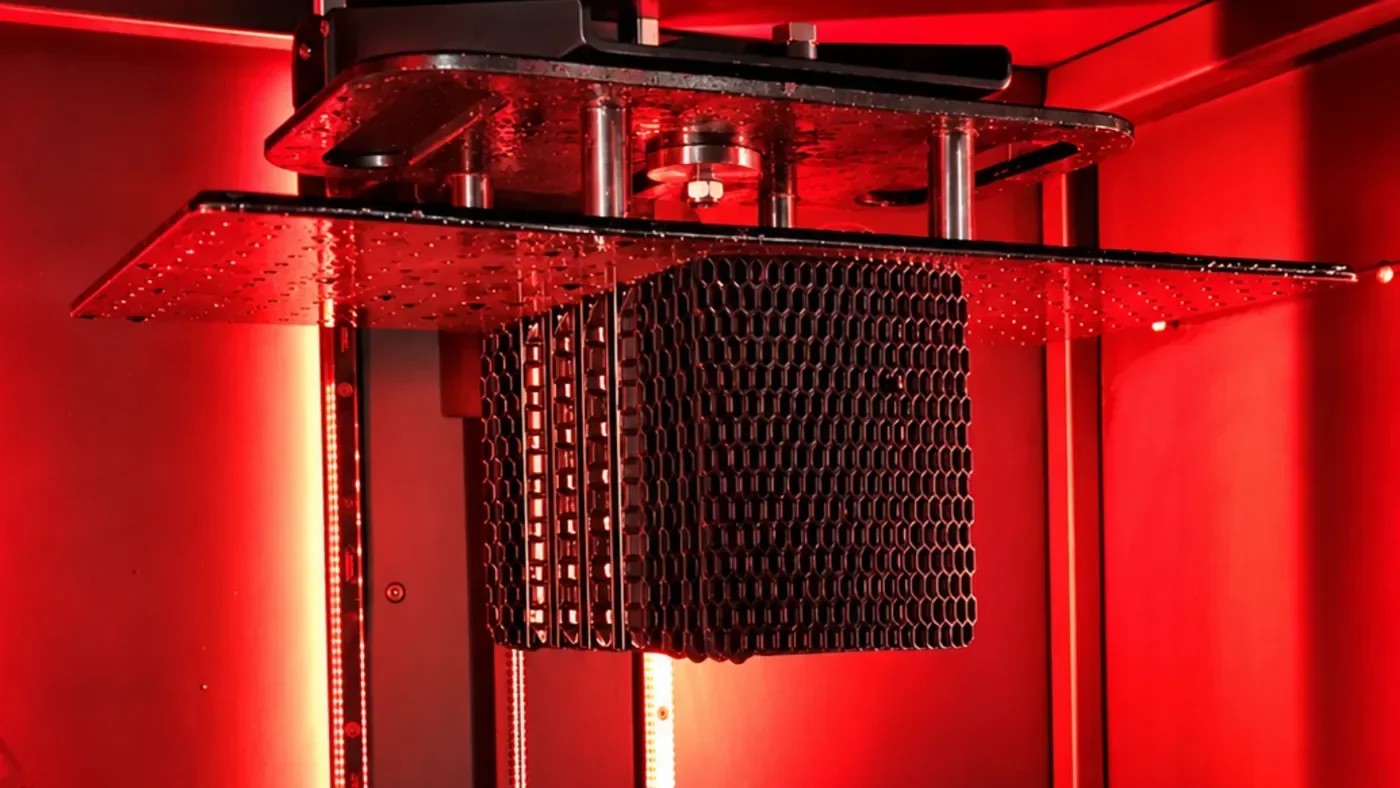
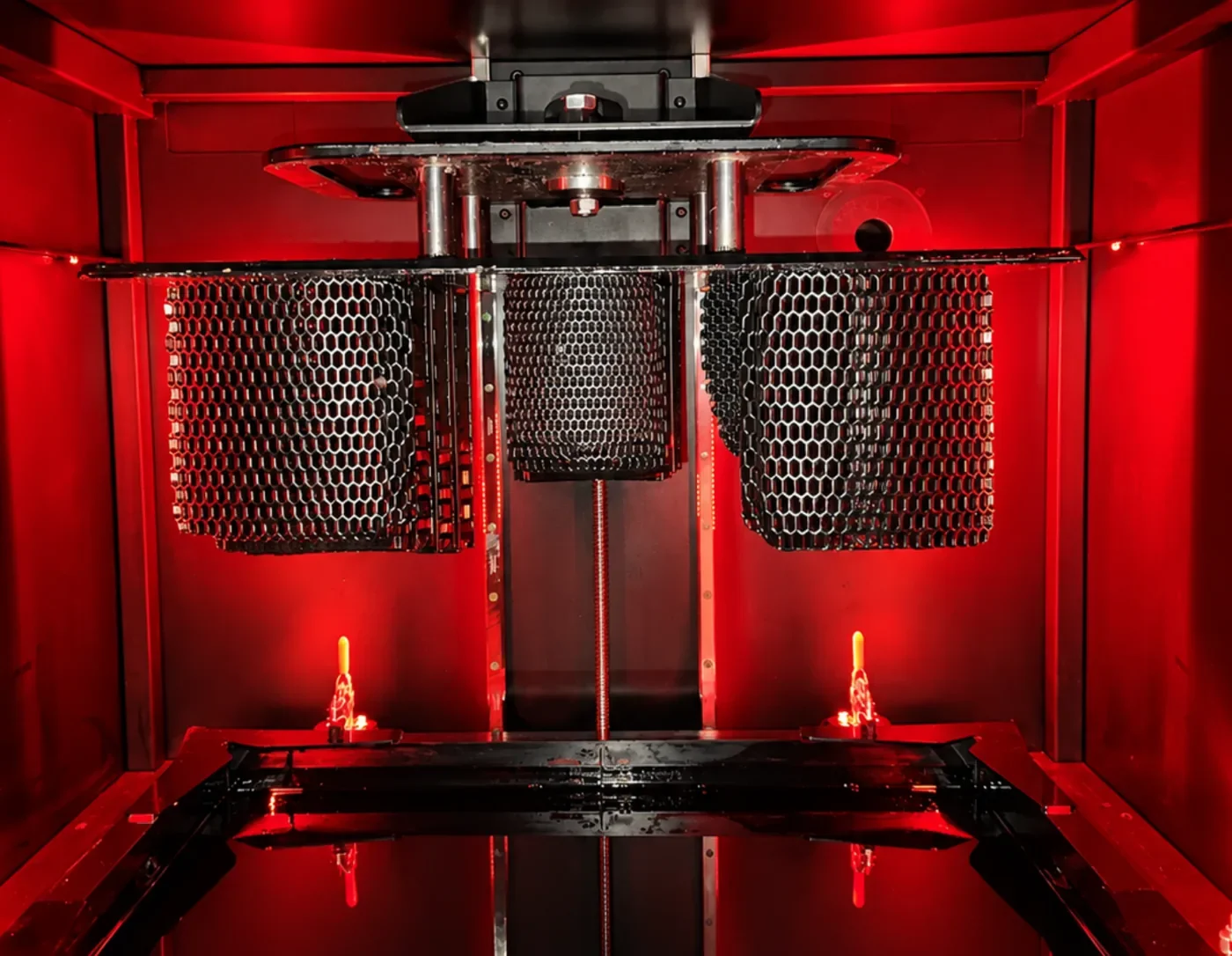
We've been running the LC Magna since July 2024. We were already doing FDM 3D printing, but we needed to move into production volumes. Redtail specializes in end-use parts, so the material had to perform, not just look good. Many resin platforms have a reputation for good-looking but brittle parts, and Photocentric's engineering-grade materials set it apart. We also considered powder bed fusion and SLS, but chose resin for its operational ease and lower consumable and material costs. We bought the Magna through Ugogo3d, who introduced our leadership to Photocentric’s products at AMUG.
What sold us was the Magna's high speed, large build volume and wide range of engineering-grade materials, most of them made by Photocentric. It also lets us go from prototyping to mass production quickly, and it gives our in-house engineering team the tools to create unique solutions for unique problems. Because there's no tooling or molds, we can offer customers an alternative to injection molding when the upfront tooling cost is out of reach or the product is too unique to mold. Photocentric's support, including their US office, made it easy to build the Magna into our production alongside our FDM, CO₂ laser and CNC capabilities.
How much did it matter to you to make the pads locally in Oklahoma, rather than outsource production?
It mattered a lot. Localized manufacturing is core to what Redtail stands for. We believe in making products close to the people who use them, and we're proud to be part of the reshoring movement bringing production back to the US. Making the pads ourselves in El Reno means we control the quality of every single product, and that delivers higher value to the customer. It also gives us more control over cost. We're not dependent on an overseas supplier and exposed to the delays and disruptions that come with a long supply chain. And it keeps us agile. If something needs adjusting, we can change it right away. From a product development standpoint, it shrinks the cycle dramatically. We can make multiple versions of a product in a single week, sometimes in days, test them and move forward. With outsourced production, that same loop could take months.
How does a Guard Series pad compare with a typical foam pad on weight or thickness? Any figures you can share would help.
Overall weight is comparable to a foam pad, but where that weight sits, and how it behaves, is very different. Typical foam pads carry most of their mass right in the center, which puts weight in the worst spot on an athlete's leg for speed. Our lattice spreads the weight more evenly across the pad. It also stays the same wet or dry. DL160 barely absorbs water, so the pad doesn't get heavier with sweat or rain as the game goes on. On thickness, typical foam thigh pads run about 10–15 mm. The Aero style pads, built for skill positions, are just 5–6 mm, roughly half the thickness or less. The Fortress pads, made for heavy contact and maximum impact absorption, are about 13–18 mm, in line with traditional pads but with the lattice doing the work.
When did you first realize DL160 would work for protective gear?
At first, DL160 looked like it might be similar to a TPU filament for FDM printing, so we bought some to test and see what it could do for our clients' products. As soon as we started testing, the team saw the performance and characteristics right away, and we started finding applications for it. Later, when we began talking about launching our own products, pads were a natural fit given my background playing football, starting with thigh pads. Once we designed and printed the first few prototypes, we were convinced. DL160 is the first printable material we've used that feels like protective gear and performs like it. It flexes with the athlete, absorbs the hit and comes back to shape, rep after rep. And because it prints walls down to 0.5 mm, we can build the fine lattice structures our designs depend on. At that point, we saw that almost any application involving impact absorption could use this material as a solution.
Elastic DL160 Properties
Which properties from DL160 were most important to you?
The first thing we looked at was how it handles impact. With 162% elongation at break and a 70 Shore A hardness, DL160 flexes and rebounds when it takes a hit instead of cracking or packing down, which is exactly what a pad needs to do. Next was durability. Its 20 kN/m tear strength means the lattice holds up to hit after hit across a full season. Then we looked at the conditions football is actually played in. DL160 stays flexible well below freezing, with a glass transition temperature of −24 °C, so it performs the same in a late-season cold game as in an August practice. Finally, it absorbs very little water, just 0.34% after 24 hours, so sweat and rain don't soften the pad or weigh it down. Together, those properties told us this was a material we could build real protective gear around.
How do the pads hold up in the varied weather conditions throughout the season?
We built Redtail's custom-formulated lattice in DL160 to give players more protection without the added weight, and to perform the same from the first practice to the last game. We've put the pads through heat exposure testing, both simulated and in direct outdoor sun, and they hold their shape and performance. We've also tested them wet and dry. Because DL160 absorbs very little water, sweat in a 38 °C August practice or rain on game day doesn't soften the pad or weigh it down. On the cold side, DL160 stays flexible well below freezing, so the pad won't stiffen up in a November playoff game. Whatever the conditions, the pad keeps protecting and moves with the athlete instead of slowing them down. Protection should enhance performance, not hinder it.
Who is wearing the Guard Series pads and what feedback have you had on how the pads perform compared with foam?
Our Guard Series is worn by NCAA Division I college football players and high school athletes.
VARSITY WIDE RECEIVER
“Finally ditched my old lineman-sized pads. These are so low-profile I forget I’m wearing them, but they take hits perfectly. The custom numbers look crazy through the white game pants.”
Marcus T.
DEFENSIVE BACK
“The Aero pads move completely naturally with your stride. Zero drag. Best piece of gear I’ve added to my setup this year.”
Jordan S.
PARENT
“Bought the 5-pad set for my son in middle school. The durability is night and day compared to the cheap foam sets we used to buy every season. Worth the investment.”
David R.
Beyond Football: Contract Manufacturing
How has utilizing LC Magna and DL160 expanded your offering?
The LC Magna and DL160 have opened up a whole category of work for us. The same setup that produces the Guard Series also powers our contract manufacturing, taking flexible, end-use parts from prototype to production run for other companies.
Since we proved DL160 on our own pads, we've applied it to custom padding for protective enclosures and helmets, and to other projects where impact absorption matters. Combined with our in-house engineering services, we can take a customer's problem, design a custom lattice or part to solve it, test it and move straight into production on the same machine. For a lot of customers, that's a real alternative to injection molding, without the tooling costs, minimum orders or long lead times. Developing the Guard Series made us experts in printing elastic materials, and now we bring that expertise to every customer project.
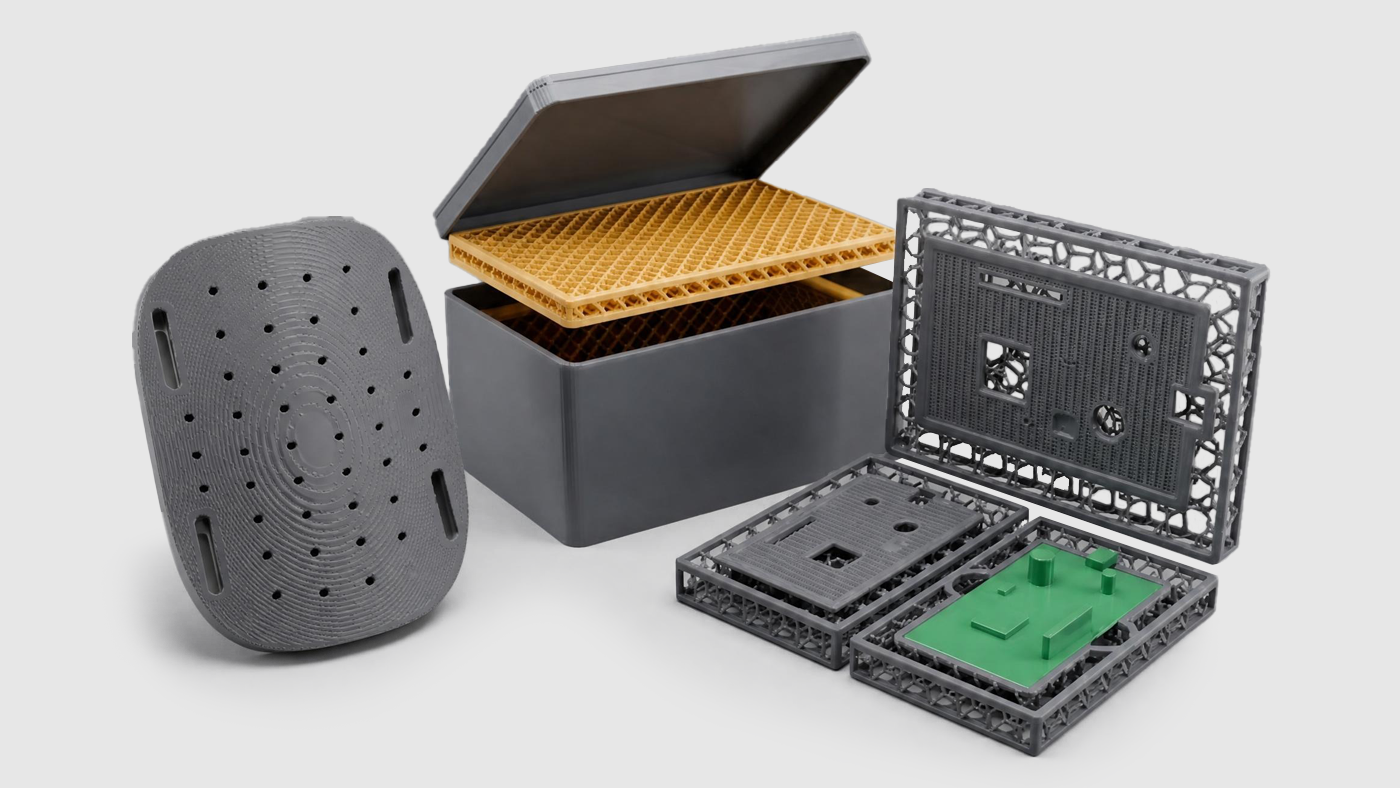
LC Magna
Large-format | Prototyping & production

The printer behind the Guard Series. A high build volume with fine detail, allowing Redtail to run large parts or high-volume batches on one platform, with repeatable results at speed.
Elastic DL160 3D Resin
Elastomeric Resin | Translucent & Black
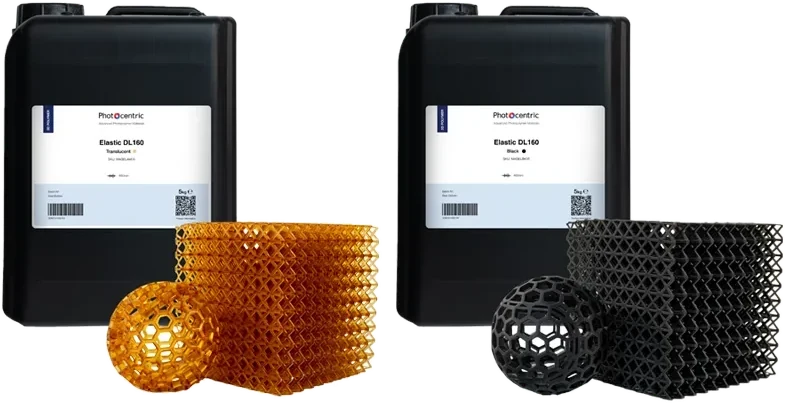
The material in every Guard Series pad. 162% elongation at break and 70 Shore A hardness let it flex and rebound hit after hit, and it stays flexible down to −24 °C.
More Than Just Flexing
Blog | Elastic DL160
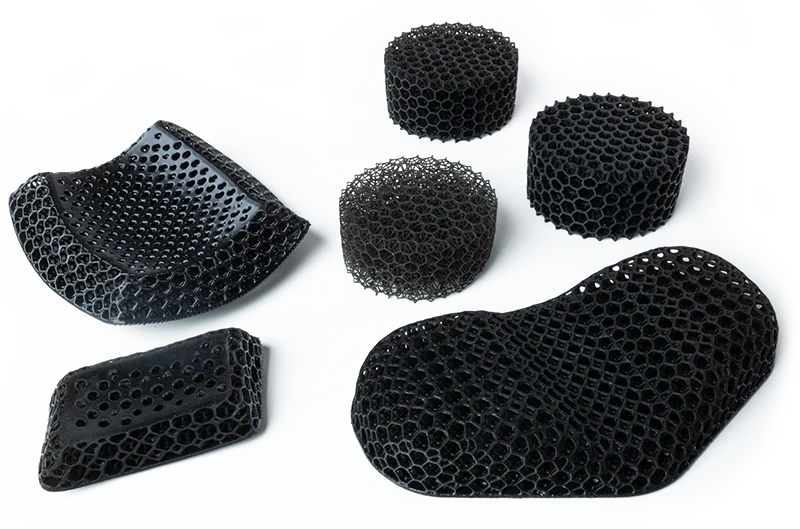
How Elastic DL160 absorbs impact and damps vibration, and how lattice geometry tunes stiffness and cushioning for parts like ventilated protective padding.