


Anthrotek
Hyper-realistic Silicone Solutions
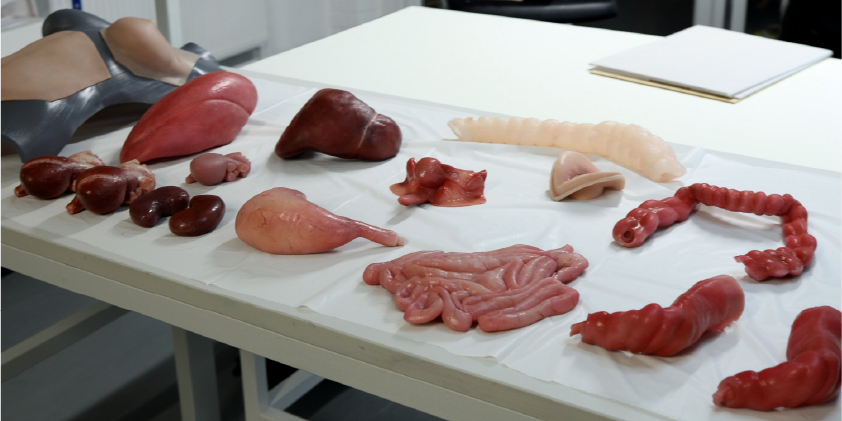
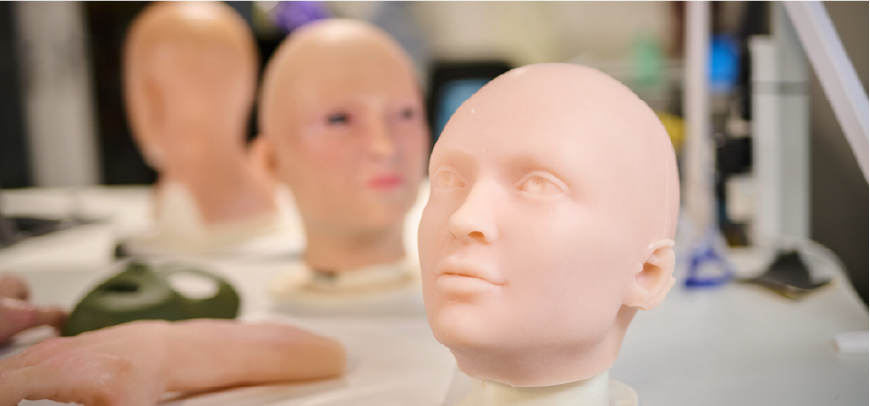
Anthrotek specialise in the manufacturing of body parts for medical, surgical training, robotics and prosthetics. Their hyper-realistic artificial skins, surgical simulation models, and anatomical replicas are already making a profound impact. From saving lives in operating rooms to advancing medical training, Anthrotek’s solutions empower healthcare professionals with tools that mirror real-life complexities.
Anthrotek also operates a sister company, The Face Forge, which focuses on both solid and silicone props for the entertainment industry, spanning films, music videos and theatre.
Anthrotek
Hyper-realistic Silicone Solutions
Anthrotek specialise in the manufacturing of body parts for medical, surgical training, robotics and prosthetics. Their hyper-realistic artificial skins, surgical simulation models, and anatomical replicas are already making a profound impact. From saving lives in operating rooms to advancing medical training, Anthrotek’s solutions empower healthcare professionals with tools that mirror real-life complexities.
Anthrotek also operates a sister company, The Face Forge, which focuses on both solid and silicone props for the entertainment industry, spanning films, music videos and theatre.
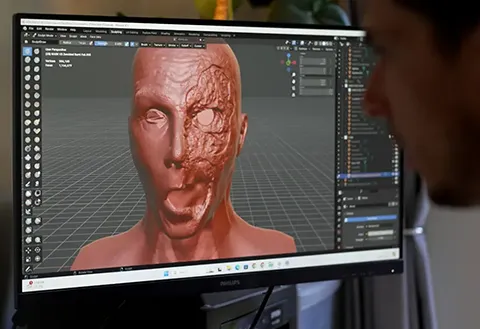
Interview with
Dr Raoul Peltier and Dr Paul Stanley

Dr Raoul Peltier |

Dr Paul Stanley |
|---|
What’s the story behind Anthrotek?
Raoul – “I have a background as a material scientist; I was an academic working in biotechnology. While I was a scientist, I had a hobby making masks and special effects in my garage for many years. Once day I met my co-founder Nazmus Tareque, who convinced me that being a material scientist with a knowledge of special effects could be very useful in the medical field.
So we created Anthrotek, a company that creates hyper-realistic medical models for surgery training, medical device testing and so on.”
How much of Anthrotek’s work is the LC Magna involved in?
Raoul – “Our LC Magna’s primary use is to print models either of organs or masks. It’s the workhorse of the company.”
How have you benefitted from having the LC Magna?
Paul – “The benefits of LC Magna over other technologies are definitely the size, print speed and quality. Printing large objects traditionally tends to be quite a slow process, but the LC Magna features innovative technology that enables really fast overnight printing even with large models.”
Raoul – “We found the key benefits of having the LC Magna is the high quality and detail fidelity that we get from the printer, which is a requirement for us. We need to be able to capture fine wrinkles and also both the internal and external textures of the stomach, intestines and other organs, which the LC Magna allows us to do.”
Which materials work best for your production?
Paul – “When we’re printing with the LC Magna we tend to use hard resins for outers, we’re a really big fan of the Magna Hard Black resin, but we also like the flexible resins Photocentric offers like DL220, which are really tough but with enough give to enable you to pass material through narrow spaces of the mould.
When you’re casting something for a large silicone mould, dimensional accuracy is really important. We’ve found that since using the Photocentric LC Magna system, the moulds we produce are essentially seamless, the surface contact between the two parts is always flush and very neat. It’s the kind of result that you couldn’t expect from any other printer.
We tend to get really reliable, clean moulds that fit very nicely together using all of the Photocentric resins.”
How reliable have you found the LC Magna to be?
Raoul – “The LC Magna has been very helpful for us for reliability. We initially purchased a very large resin printer by a brand and manufacturer in China, which proved to be quite unreliable, this was when we decided to buy the LC Magna and since then, it’s been the workhorse of the company.
Our LC Magna prints most of our moulds and we have a certainty that a print is very unlikely to fail and will deliver the moulds we critically need on time.”
“Our experience with Photocentric can be summarised in a few words, reliable, good support and great communication.”
Dr Raoul Peltier
Anthrotek’s Work in Ethical Research Education utilising Photocentric Products.
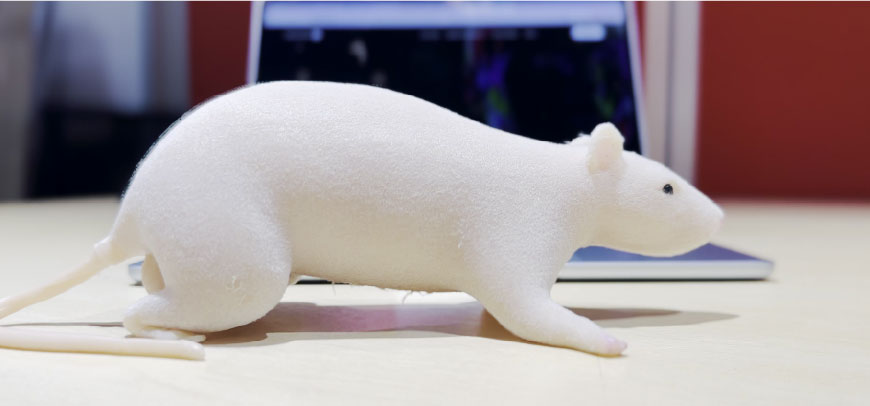
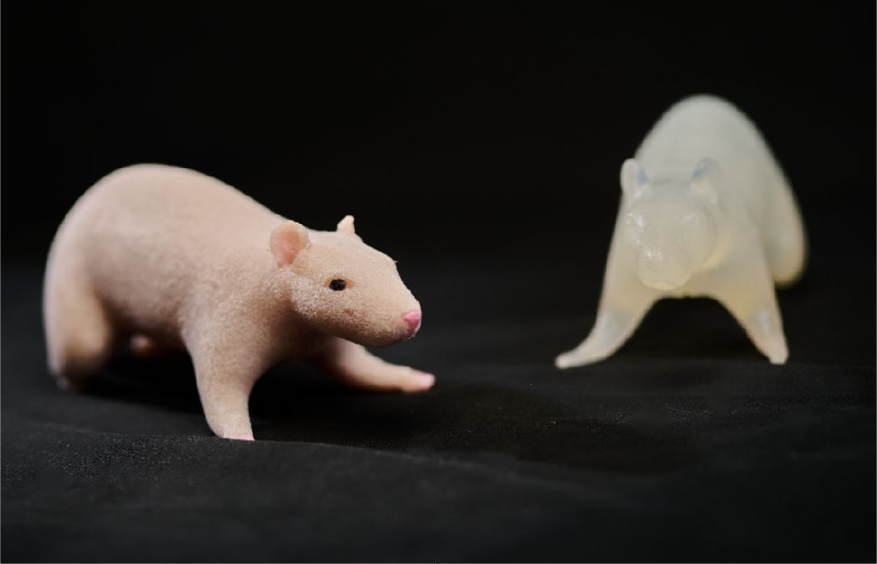
A combination of Photocentric hardware and resins have enabled Anthrotek to create silicone animal models, promoting humane methods for skills development.
Every year, millions of procedures worldwide rely on live animals for training and experimentation. Anthrotek support the ethical transition by offering hyper-realistic silicone animal models and are fighting to replace live animals in foundational research training with hyper-realistic silicone models.
These silicone models are anatomically accurate replicas that mimic real tissues and organs. Empowering students and researchers to develop procedural skills such as suturing, injections, or surgical incisions – without relying on live animals.
The moulds for these silicone animal models are made using the LC Magna, and the skeletal structures are printed using the Photocentric Polycarbonate-like resin. The animal models are reusable and are aligned with ethical and regulatory standards. Setting a new standard for humane, effective learning.
LC Magna and Photocentric resins for Props
Tell us about The Face Forge?
Raoul –
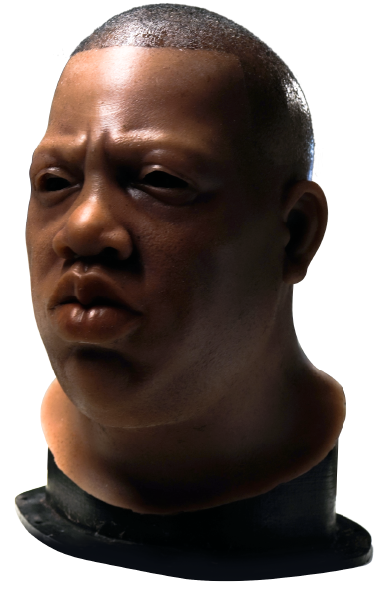
“The Face Forge is the brand of Anthrotek which deals with the cinematic and entertainment industries. It is a little bit my baby, it’s the brand I started while I was still doing masks in my garage as a hobby.
I decided to build a website and put my work out there, see what people think. So I created the name The Face Forge and put the website out there. Quickly it picked up notoriety and I started being contacted by music artists and then later, some small movies which then evolved into larger movies.”
What are some of the projects that The Face Forge have been involved in?
Raoul – “As part of The Face Forge we have worked with musical artists, the most famous is probably Burna Boy, for whom we have done a few masks of his face for his dancers.
We’ve worked with smaller production movies such as Your Host (2025) or The Run (2025). That has evolved into working with Danny Boyle on the production of 28 Years Later (2025).”
Which resins have you found work best for your mask props?
Raoul – “We work with advanced resins, in-particular the Photocentric Polycarbonate-like 405nm and tough resins, which are quite helpful when we do more artistic work such as masks for movies and musical artists. Props is the main applications that we find this resin helpful.”
Paul – “We use the Photocentric Polycarbonate-like 405nm resin on our standard hobbyist printers and the level of detail that’s possible to print, even extremely thin structures come out both flexible and durable enough that support removal and post process becomes basically easy.
The masks we make with Polycarbonate-like 405nm are really tough. We often make resin masks for customers for various theatrical things and previously, before using Polycarbonate-like, one of the things that happens again and again is drops with people who don’t handle them with quite enough care.
Mistakes happen and some people do drop the masks and we’ve found that traditional standard resins are very brittle and masks are likely to smash irreparably when dropped – but with the Polycarbonate-like resin, we’ve found that not only are the masks drop and impact proof, but you can stand on them without any kind of damage or breakage.”
Magna Hard Black
Rigid | 460nm
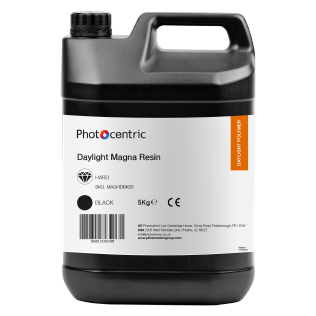
Ideal for making large objects displaying extreme hardness with no compression under high force, negligible plastic deformation due to yield strength before breaking and with minimal shrinkage.
LC Magna
Versatile Medium-Sized Printing & Prototyping
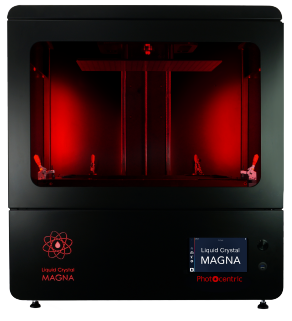
Expertly built for professionals who demand quality, reliability, and scalability. Its large build volume, industrial-grade performance, make it the perfect choice for businesses.
Polycarbonate-like
Rigid | 405nm
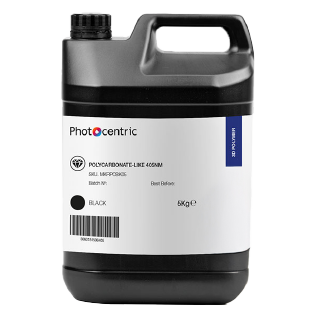
Low-cost, accurate printing. The low-irritancy and low odour make printing and post- processing safer and easier, while printed parts exhibit the precision and strength of conventional hard plastics.